



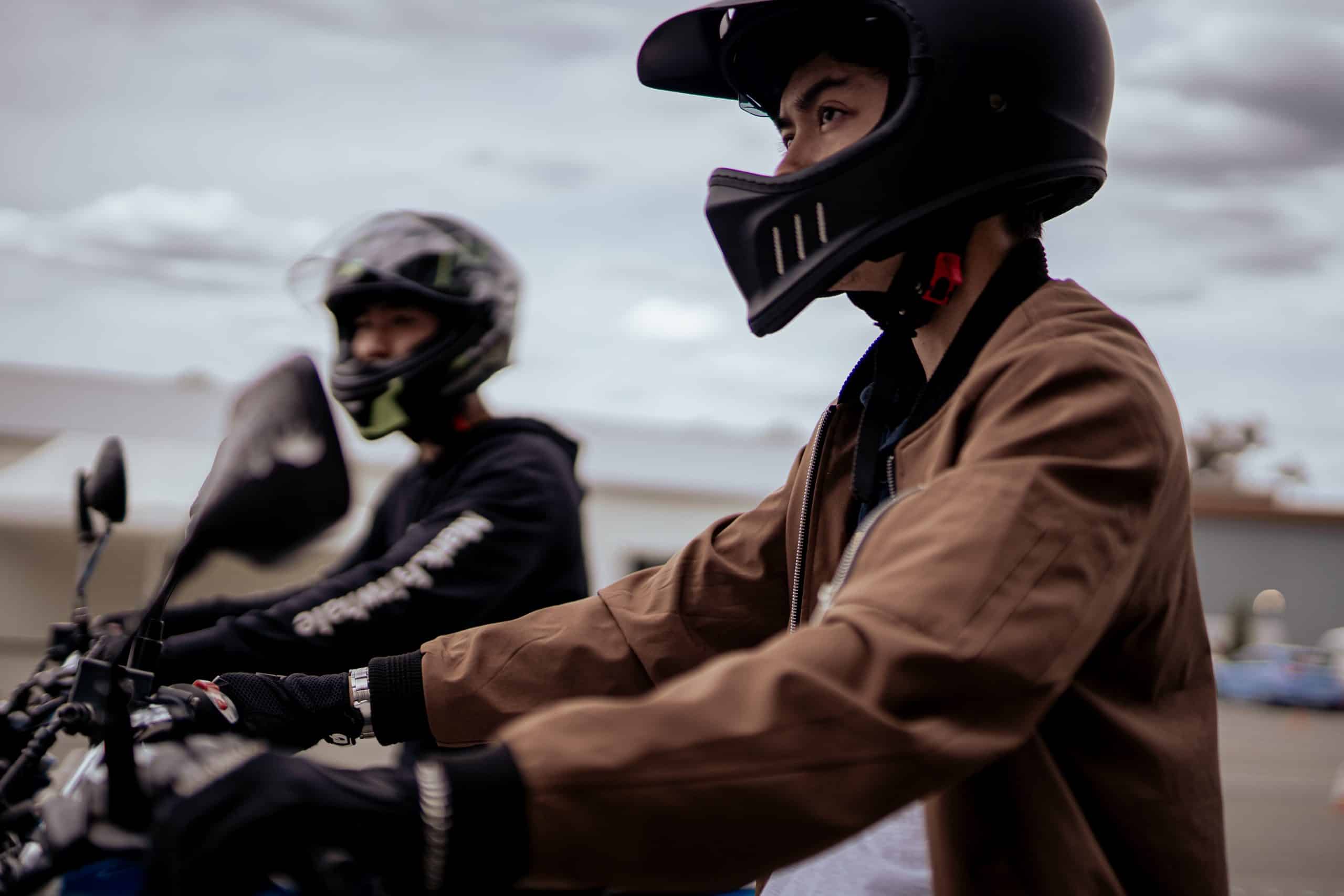
Protective gear requirements for learner and provisional riders
Find out about the new mandatory motorcycle protective gear requirements for learner and provisional riders that start on 1 July 2026. These changes are designed to improve your safety as you learn to ride.

High-visibility vests and jackets for learner riders
From 1 July 2026, learner riders must wear an approved high-visibility (hi-vis) vest or jacket when riding. This makes it easier for other road users to see you, reducing the risk of a crash.
You can purchase an approved hi-vis vest or jacket from motorcycle retailers or workwear stores. To be approved vests and jackets must be labelled or marked by the manufacturer as complying with one of the following standards:
- AS/NZS 4602.1:2011 – Class D/N
- AS 4602.1:2024 – Class D/N
- ISO 20471:2013
Vests with a zippered front or pull-over style are more secure and will not open or flap when you ride.
Protective gloves for learner and provisional riders
From 1 July 2026, learner and provisional riders (P1 and P2) must wear approved protective gloves when riding. Gloves reduce the risk of hand injuries if you fall or crash.
To be approved, the gloves must be labelled or marked by the manufacturer as complying with European Standard EN 13594:2015.
Motorcycle Clothing Assessment Program (MotoCAP) provides information and ratings on a range of protective gear including gloves. You can use the search filter labelled “standard” to view motorcycle gloves that meet European Standard EN 13594:2015.
Penalties
If you are a NSW learner or provisional rider, you must wear the required protective gear every time you ride.
From 1 July 2026, failure to comply with this requirement is an offence and will incur fines and demerit points.
Protective gloves Frequently Asked Questions
Why is protective clothing important?
Protective clothing has been shown to reduce the severity of injuries and risk of hospitalisation for crashed riders with greater benefits seen from garments that incorporate impact protection, however, despite the clear benefits of wearing protective clothing, many motorcyclists ride without appropriate gear.
Strong stakeholder and community feedback underscores the critical role of protective clothing in reducing injury severity.
What is the protective gloves requirement?
From 1 July 2026, NSW Learner, P1 and P2 licence holders will be required to wear motorcycle gloves that comply with European Standard EN 13594 while riding, to reduce serious injury.
How do I know if my gloves are compliant?
Compliant gloves will have a label or tag that includes the EN 13594:2015 certification symbol. It’s important that you don’t remove compliance tags.
Do I need to wear level 1 or level 2 EN 13594 gloves?
You can wear either level 1 or level 2 gloves that comply with EN 13594.
The standard provides for two different levels of performance. Level 1 gloves have a lighter and more flexible design and level 2 provides increased heavy-duty protection. Both levels meet minimum performance requirements.
Why are motorcycle protective gloves being mandated? Why not other gear like jackets, pants or boots?
Research indicates that certified motorcycle gloves can cut hand and wrist injuries by up to 45%.
Motorcycle gloves reduce the risk of soft tissue injuries and open wounds including contusions, abrasions, cuts and lacerations. They help prevent hand injuries which are among the most significant for disability and impairment due to impacts on daily living and work capacity
Gloves deliver a high safety impact at relatively low cost, making them a logical first step toward broader protective-gear mandates.
Other items, such as boots, jackets and pants, lack well-established minimum performance standards for Australian conditions and need further research before mandating.
Transport will maintain its support for MotoCAP and integrate protective clothing messaging into revised training and education materials to encourage greater adoption of safety gear which will benefit both novice and fully licensed riders.
Will the rule also apply to P2 pillion passengers?
It will only be a requirement for the rider themselves, not for their passenger.
Trauma data shows that the risk to a pillion passenger with a P2 rider is very low:
- Data between 2020 and 2024 shows that there were no fatalities of pillion passengers from bikes ridden by a P2 rider
- Data between 2019-2023 show that 11 pillion passengers on bikes ridden by a P2 rider suffered a serious injury, out of a total of 4831 rider serious injuries over the same time period.
The evaluation of the reforms will review the impact of the condition and consider future options which will include the requirement of P2 passengers to wear gloves and the requirement for all riders (not just L,P1 & P2) and their passengers to wear gloves.
Why aren’t these requirements being introduced for all riders?
The introduction of the condition to novice riders can be viewed as a staged approach to increasing mandatory protective gear for riders.
Starting with novice riders aims to embed safe protective gear choices in rider behaviour early in their riding experience, it also targets riders when they are most at risk.
Are there any requirements internationally to wear protective gloves?
Yes, motorcycle riders in France and Spain are required to wear protective gloves.
In France, motorcycle riders and their passengers must wear gloves that meet the EN 13594 standard.
In Spain, a standard does not apply but riders must wear gloves made of thick leather, imitation leather, kevlar, or a similar material highly resistant to abrasion and heat.
How much will protective gloves cost?
These gloves are widely available, with entry-level models starting at approximately $50.
Do these reforms require any legislative or regulatory change?
Yes, regulatory amendments have been made to mandate both gloves and high-visibility vests or jackets.
What will the penalties be for NSW learner, provisional P1 and provisional P2 riders not wearing protective gloves?
The proposed penalty for non-compliance with each requirement would be two demerit points and a Level 4 fine.
This is consistent with the penalty framework applied to other breaches of novice licence conditions such as failing to display “L” or “P” plates and unauthorised carriage of a pillion passenger by P1 licence holders.
Will interstate learner, P1 and P2 riders be required to wear gloves?
The reforms will apply only to NSW riders, not riders from other states.
Interstate riders must follow their licence conditions applied by the state or territory that issued their licence, as well as the NSW road rules when in NSW.
Similarly, when NSW riders travel to another state/territory, they must continue to follow the NSW licence conditions and the road rules in that other state/territory.
The shop is out of stock of compliant gloves, can I wear other ones in the meantime?
No, you must not ride if don’t have compliant gloves to wear from 1 July 2026.
Plan early. Try to secure a pair of compliant gloves well before 1 July 2026.
If a shop doesn’t have any stock left, try calling other shops or shop online.
How can I be sure that gloves are compliant? Will the government publish a list of compliant products?
The government is not going to publish a list of gloves that comply with EN 13594:2015.
When purchasing gloves, check that the gloves have a tag or label displaying compliance with EN 13594:2015. This information should also be highlighted on any packaging or information describing the gloves, if purchasing online.
High-visibility vests or jackets Frequently Asked Questions
What is the high-visibility clothing requirement?
Learner riders will be required to wear a high-visibility vest or jacket that meets one of the following prescribed standards:
- AS/NZS 4602.1:2011, class D/N
- AS 4602.1:2024, class D/N
- ISO 20471:2013
Class D/N means it’s suitable for wear in both day and night conditions.
How do I know if my vest or jacket is compliant?
Compliant high-visibility vests or jackets will have a label or tag that references the prescribed standards.
For AS 4602.1 and AS/NZS 4602.1 compliant vests and jackets, make sure that the compliance tag also includes ‘Class D/N’. Tags with just ‘Class D’ or ‘Class N’ are not permitted.
It’s important that you don’t remove compliance tags.
Can I wear a high-visibility vest or jacket that complies with EN 471, the European standard proceeding ISO 20471:2013?
No, learner, provisional P1 and P2 riders may only wear high-visibility vests or jackets that meet the prescribed standards. EN 471 is not a prescribed standard.
Does my high-vis vest or jacket need to comply with a particular level of Class D/N?
Your high-visibility vest or jacket can be any level or class as long as it complies with one of the prescribed standards.
Some of the standards specify different levels, or classes, of high-vis garments, up to level/class 3. Level/Class 3 provides the most visibility.
What is the benefit of mandating high-visibility vests or jackets for learner riders?
Rider visibility is a key factor in preventing crashes, many collisions occur because other road users have failed to see a rider. High-visibility apparel is linked to improved detection and safer rider outcomes.
Are high visibility vest or jackets required for motorcyclists in other jurisdictions/areas?
In Australia, Victoria requires motorcycle learners to wear a high visibility vest or jacket that is visible and securely fitted and fastened since October 2014.
In NSW, food delivery riders must wear with high visibility personal protective equipment while carrying out food delivery work, regardless of their licence status.
How much will a high-visibility vest cost?
High-visibility vests are affordable, with prices starting from $20 to $30.
Do these reforms require any legislative or regulatory change?
Yes, regulatory amendments have been made to mandate high-visibility vests or jackets for learner riders from 1 July 2026.
What are the penalties?
The penalty for non-compliance with the requirement to wear a high-vis vest or jacket is two demerit points and a Level 4 fine.
This is consistent with the penalty framework applied to other breaches of novice licence conditions such as failing to display “L” or “P” plates and unauthorised carriage of a pillion passenger by P1 licence holders.
Will high-visibility vests and jackets be required to be worn by interstate learner riders?
The reforms will apply only to NSW riders, not riders from other states.
Interstate riders must follow their licence conditions applied by the state or territory that issued their licence – this means Victorian learner licence holders will also need to wear high visibility vests and jackets as applied in that state.
Similarly, when NSW riders travel to another state/territory, they must continue to follow the NSW licence conditions and the road rules in that other state/territory.
Does my work high-vis shirt count as a high-visibility jacket?
Yes, you can wear your work high-visibility shirt as long as it meets one of the prescribed standards.
But remember hi-visibility clothing makes you more visible to other road users it doesn’t protect you if you crash. It is recommended that you wear your hi-vis vest or jacket over a protective motorcycle jacket.
Is there a protective motorcycle jacket that also meets the requirements of an approved high-visibility vest or jacket?
The NSW Government is not aware of any protective motorcycle jackets that also meet the required standards for high-visibility garments.
It is recommended that you wear your hi-vis vest or jacket over a protective motorcycle jacket.
High-visibility vests and jackets come in a number of different colours. Do I need to buy a particular colour?
As long as the vest or jacket meets one of the prescribed standards, it doesn’t matter what colour it is.
How should I wear my high-vis vest or jacket?
Make sure you wear the high-vis vest or jacket over the top of any other items of clothing, including your protective motorcycle jacket. Wearing high-visibility garments under another item of clothing defeats the purpose of increasing your visibility.
If possible, fasten your vest or jacket to ensure the high-vis materials are visible to oncoming traffic. Wearing your vest or jacket done up will also help reduce the likelihood of them getting caught in the wind as you ride.
Vests with a zippered front or pull-over style are more secure and will not open or flap when you ride.
How will the new protective gear requirements be enforced?
NSW Police may ask to see the compliance tag/label on the gloves or high-visibility vest or jacket.
It’s important that you don’t remove the compliance tags.
What happens if I’ve removed the compliance tag?
It is a requirement that gloves and high-vis vests and jackets have a tag or label demonstrating compliance with one of the prescribed standards.
If there are no compliance tags to demonstrate compliance, you may be issued with an infringement notice.
Can I wear a bag or backpack over my hi-vis vest or jacket?
Yes, bags and backpacks can be worn over your high-vis vest or jacket.
Where possible, it’s best to use bags or bag covers with high-vis materials (fluorescent colours and reflective materials).
Does my high-vis vest or jacket need to be done up?
It’s a good idea to fasten your vest or jacket properly to ensure optimal visibility and reduce the likelihood of them getting caught in the wind as you ride.
High-visibility vests in particular are quite light-weight and therefore likely to flap in the wind, especially if you’re travelling at higher speeds. If you don’t do them up, they may get tangled and interfere with your ability to control the vehicle safely.
Vests with a zippered front or pull-over style are more secure and will not open or flap when you ride.
Related information
- Road User Handbook Motorcycle Rider Handbook (PDF 2.53MB) Motorcycle tips, trips and interactive hazard perception tests Rider training centre locations Getting your rider licence Rider provisional P1 licence Rider provisional P2 licence Find a rider training centre Motorcyclists

